
Buying a home in Spain
Property Handover in Spain: What Should You Check Before the Purchase Is Truly Complete?
Last updated on 27.08.2026Receiving the keys to your Spanish property is a milestone. After weeks or months of searching, paperwork and decision-making, signing the title deed can feel like the finishing line.
In practical terms, however, property handover in Spain involves more than signing at the notary and walking away with the keys.
For international buyers in particular, this is a good moment to make sure the property, its documentation and the practical arrangements surrounding it are properly handed over.
Build a complete property file
After completion, you should have a clear record of the property you have purchased and the documentation associated with it.
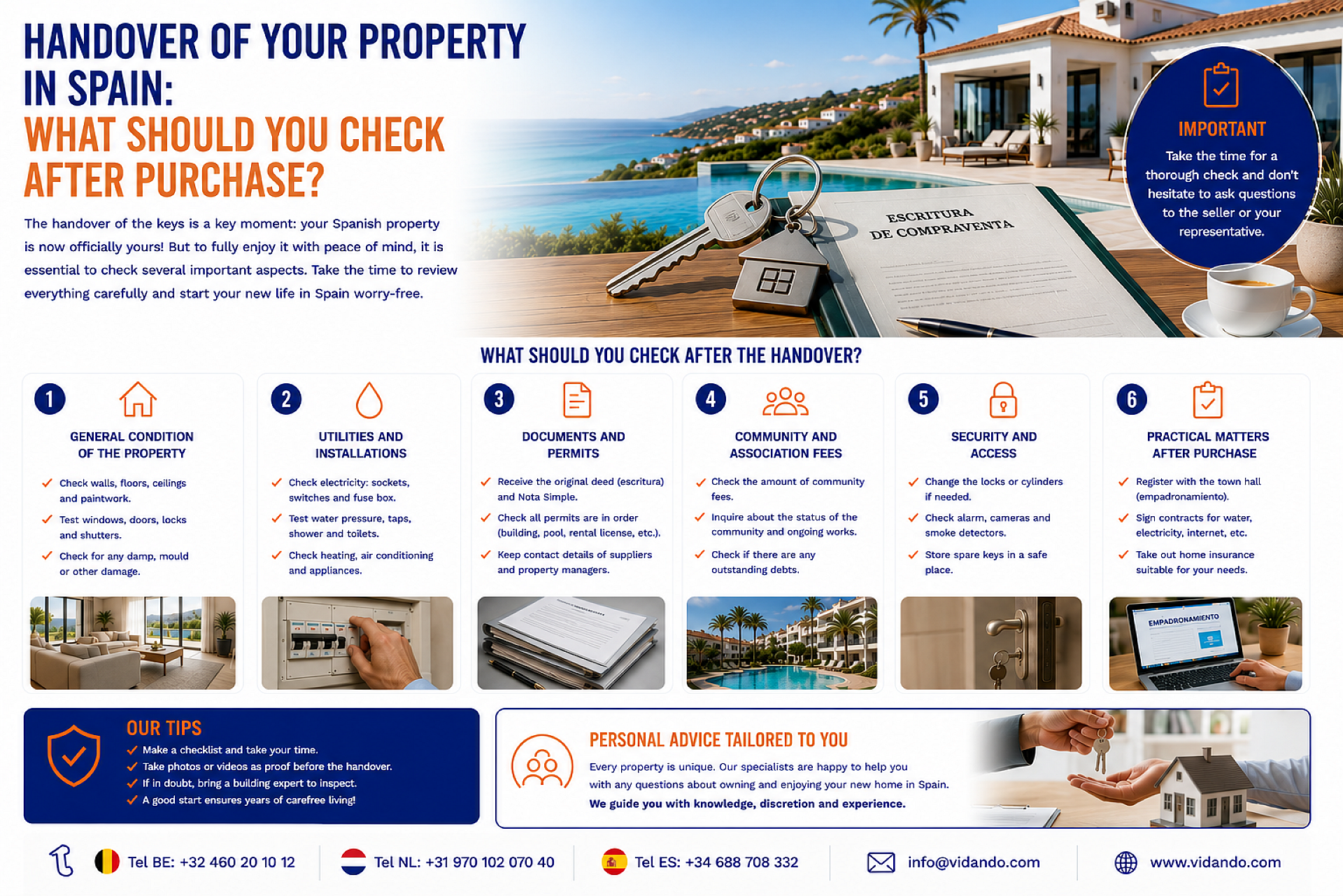
Depending on the property and transaction, relevant documents may include:
- your Escritura, or title deed;
- a recent Nota Simple from the Spanish Property Registry;
- the property's Energy Performance Certificate;
- the First Occupancy Licence or other relevant documentation relating to the authorised use of the property;
- information concerning the current IBI property tax position;
- information or certification regarding outstanding community fees, where applicable;
- electricity, water and gas documentation;
- warranties, manuals and paperwork for equipment and installations included with the property.
The exact documentation can vary according to the property, location and circumstances of the transaction. Appropriate legal professionals should therefore confirm which documents and checks apply to your purchase.
Keys, meters and access: the small details that matter
The administrative file is only part of the handover.
On the day you take possession, record the readings for electricity, water and gas where applicable. Taking dated photographs of the meters can provide a useful record.
It is also worth checking that you have received every means of accessing the property.
That may include keys for the property, storage areas and letterbox, as well as garage remotes, gate controls, security devices, access cards and keys to communal areas.
These details may appear minor while everyone is focused on completion, but sorting them out during the handover is considerably easier than trying to resolve them afterwards.
Taking delivery of a new-build home in Spain
A new-build handover requires another important step: carefully inspecting the finished property.
Walk through the home methodically and record defects or unfinished items in a snagging list.
Depending on the property, this can include checking finishes, doors and windows, bathrooms, kitchen fittings, electrical installations, lighting, air-conditioning and installed appliances or equipment.
Photographs and videos provide a useful visual record. Any issues identified should also be communicated in writing through the appropriate process.
The objective is straightforward: establish a clear record of the condition in which the property was delivered.
What happens after signing the title deed?
Completion may trigger several further administrative tasks.
Depending on the purchase, these can include completing registration formalities, settling the relevant taxes, changing utility contracts into the new owner's name, informing the community administration of the ownership change and arranging suitable property insurance.
If you live outside Spain, knowing who is responsible for each of these steps is particularly important.
Agreeing this with your lawyer, gestor or other relevant professional before completion can make the post-purchase process considerably smoother.
Think beyond the keys
A useful way to approach completion is to ask yourself four questions:
- What exactly have I purchased?
- Which documents have I received?
- What is the current practical and administrative status of the property?
- What still needs to happen after completion?
If you can answer those questions clearly, your property handover is about much more than receiving the keys.
It becomes a structured transition from buyer to owner.
Vidando Estates assists international buyers searching for and purchasing property in Spain, with support throughout the buying journey and the handover process.